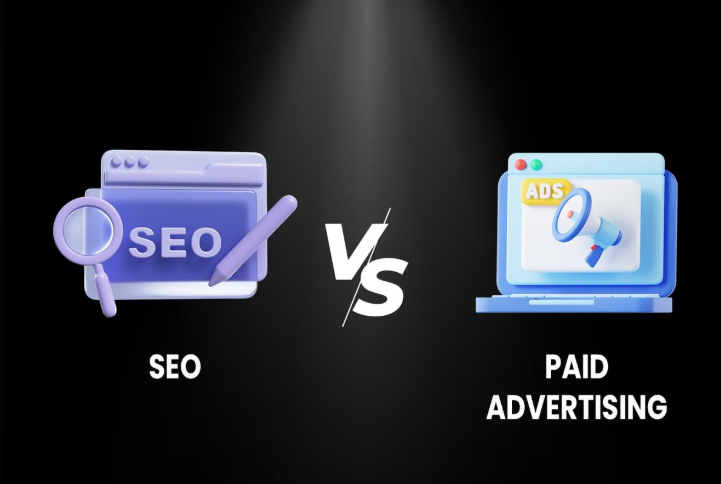
Every business owner trying to grow online asks the same question sooner or later – Should I invest in SEO or just run paid ads? It feels like a tough choice, but the truth is, both options have real value. The key is knowing how each one works, what they cost, and what kind of results they bring.
In this blog, we break everything down in simple terms so you can make the right call for your business – whether you're just starting out or looking to scale.
What Is Organic SEO?
Organic SEO is the process of making your website show up in search results without paying for clicks. When someone types a question into Google and clicks on a regular result (not an ad), that's organic traffic at work.
To get there, you focus on things like:
- • Writing helpful content that answers what people are searching for
- • Making your website fast and easy to use on mobile
- • Building links from other trustworthy websites
- • Fixing technical issues that stop search engines from reading your pages
Organic SEO takes effort and time, but once it works, it keeps working – sometimes for months or even years after the content is published. Think of it as planting a tree. It takes time to grow, but once it does, it gives shade for a long time.
What Are Paid Ads (PPC)?
Paid advertising, often called Pay-Per-Click or PPC, is when you pay to show your ad at the top of search results. Platforms likeGoogle Ads Facebook Ads, LinkedIn Ads, and YouTube Ads all run on this model. You set a budget, choose your target audience, and your ad appears right away.
The biggest advantage is speed. You can launch a campaign today and get visitors to your site by tonight. It's like turning on a tap – the water flows as long as you keep it on.
Common paid ad formats include search ads, display ads, shopping ads, and retargeting ads. All of them let you choose who sees your message based on things like location, age, interests, or even what they've searched before.
Organic SEO vs. Paid Ads: Key Differences at a Glance
| Factor | Organic SEO | Paid Ads |
|---|---|---|
| Cost | Investment in content and time | Pay per click or impression |
| Speed | Takes weeks to months | Immediate results |
| Longevity | Traffic continues even after you stop | Stops when budget runs out |
| Trust | Users trust organic results more | Seen as promotional by many users |
| Targeting | Keyword and content-based | Precise by demographics, location, device |
| ROI over time | Grows and compounds | Predictable but requires ongoing spend |
Why Organic SEO Builds Long-Term Value
One of the biggest advantages of organic SEO is that it creates lasting assets. A well-written article or a properly optimized page doesn't just drive traffic today – it can keep bringing visitors for years.
Research consistently shows that a large majority of users trust organic search results more than paid ads. Many people skip right past ads and head straight to the natural results because they feel those have been "earned" and are more relevant to what they're looking for. This trust translates into better click-through rates and often more engaged visitors.
Another major plus: organic SEO improves your entire website. To rank well, you need fast load speeds mobile-friendly pages, clear site structure, and high-quality content. All of these things also make your site a better experience for visitors, which helps conversion rates too.
For businesses with limited budgets, organic SEO is especially valuable. The upfront investment in content and optimization can pay off for a very long time, bringing a much lower cost-per-visitor compared to paid campaigns. Over 53% of all website traffic comes from organic search – that's more than half the market that you could be missing if you focus only on ads.
The Real Power of Paid Ads
Paid ads aren't just for quick wins – they're genuinely powerful when used in the right situations.
Say you're launching a new product, running a seasonal sale, or trying to enter a new market fast. Organic SEO won't help you in the next 48 hours, but a well-set-up ad campaign can. Paid ads give you immediate visibility and precise control over who sees your message.
Another advantage is data. Paid campaigns generate detailed performance metrics quickly – things like which keywords convert, what messaging works, which audience segments click and buy. This information is incredibly useful, not just for improving ads, but also for shaping your content and SEO strategy.
However, paid ads have a clear weakness: the moment your budget stops, your traffic stops. In competitive industries like healthcare, finance, or tech, the cost-per-click has been climbing year over year. This makes it expensive to rely on ads alone for long-term growth. Think of paid advertising as renting attention – the moment you stop paying, the landlord takes back the space.
Common Mistakes Businesses Make
Before jumping into either strategy, it helps to know what not to do:
- • Neglecting SEO because ads are performing well. Many businesses get comfortable with paid traffic and never build an organic foundation. When ad costs rise or campaigns underperform, they're left with nothing to fall back on.
- • Running ads without a clear landing page strategy. Sending paid traffic to a generic homepage often wastes budget. Every ad should lead to a focused page that matches the ad's message and encourages action.
- • Treating SEO as a one-time task. SEO isn't something you do once and forget. Search engine algorithms change, competitors publish new content, and your site needs regular updates to keep its rankings.
- • Ignoring mobile SEO and site speed. Google now uses mobile performance as a key ranking factor. A slow or hard-to-use site hurts both your organic rankings and your paid ad Quality Score, which directly affects how much you pay per click.
How to Decide Which One Is Right for You
The answer depends on where your business is right now.
If you're just starting out: Focus on building organic SEO first – set up your website, create consistent content, and nail your fundamentals. Use paid ads selectively for important launches or milestones. Trying to rely on paid ads from day one is expensive and unsustainable without a solid base.
If you have a time-sensitive goal: Use paid ads to accelerate. A product launch, an event, or a limited-time offer needs quick traction. Ads give you that speed. Just make sure your website and landing pages are ready to handle the traffic before you spend a single rupee on clicks.
If you're established and want to scale: Combine both. Use paid campaigns to test new ideas and audiences quickly, and use organic content to capture the keywords that prove themselves over time. Monitor which organic pages perform well and consider boosting them with paid promotion for even greater reach.
If your budget is limited: Organic SEO is your best friend for the long game. It takes more patience, but every piece of content you publish becomes a permanent asset. At YS Digital Services, we often tell clients that a strong organic foundation is the most cost-efficient investment they can make in their digital presence.
📊 Real story: How a Melbourne business combined both for 3x growth
A local home services business had been running Google Ads for years with decent results, but their costs were rising. They had no organic presence. We built them a content strategy targeting low-competition local keywords and started publishing helpful guides. Over six months, their organic traffic grew to match their paid traffic. They reduced ad spend by 40% while total leads increased by 60% – because organic leads were cheaper and converted at a higher rate. The paid ads now serve as a top-of-funnel boost, while SEO handles the steady lead flow.
The Smartest Strategy: Use Both Together
Organic SEO and paid ads work best as a team. They cover each other's weaknesses and amplify each other's strengths.
Here's how they can work together in practice:
- • Use paid ads to drive traffic while your organic SEO efforts are still building momentum
- • Run PPC campaigns to test which keywords actually convert, then build organic content around those proven winners
- • If a blog post or video is already performing well organically, boost it with paid promotion to reach an even wider audience
- • Retarget organic visitors with display or social ads to bring them back when they're ready to act
This combined approach is something the team at YS Digital Services uses regularly with clients – because it gives you speed and sustainability at the same time. Paid ads create momentum; organic SEO makes it last.
Key Benefits Summary
Organic SEO gives you:
- • Traffic that keeps coming even after you stop actively working on it
- • Growing authority and credibility in your niche
- • Better website experience for all visitors
- • Lower cost per visitor over the long term
- • A wide reach across hundreds of related search terms, not just one or two keywords
Paid Ads give you:
- • Immediate visibility the same day a campaign launches
- • Precise audience targeting by location, interest, behavior, and more
- • Clear, trackable performance data in real time
- • Ideal for promotions, launches, and time-sensitive campaigns
- • Quick feedback on what messaging and offers resonate with your audience
Conclusion
Organic SEO and paid ads are not rivals – they're two different tools that serve different needs. If you want quick wins, paid ads deliver. If you want lasting growth, organic SEO is your foundation. And if you want both? Use them together.
The best businesses don't ask "Which one should I use?" They ask "How do I use both the right way for where I am right now?" That's the mindset that leads to real, sustainable digital growth.
If you're not sure where to start, the team at YS Digital Services is here to help you figure out the right mix for your goals, timeline, and budget.
Frequently Asked Questions (FAQs)
Q1: How long does organic SEO take to show results?
organic SEOtypically takes 3 to 6 months to start showing meaningful results. But once you start ranking, the traffic can continue for a very long time without additional cost.
Q2: Is paid advertising worth it for small businesses?
Yes, especially for specific goals like product launches, promotions, or entering a new market fast. The key is to set a clear budget, target the right audience, and have agood landing page ready. Without a strategy, ad budgets can disappear quickly with little return.
Q3: Can I use both SEO and paid ads at the same time?
Absolutely. In fact, combining both strategies often delivers the best results. Paid ads generate quick traffic and data, while organic SEO builds long-term visibility. Many businesses use paid campaign data to discover which keywords and messages to target in their SEO content.
Q4: Why do users trust organic results more than paid ads?
Organic results appear because search engines determine they are the most relevant and helpful answers. Users know that these results haven't been purchased – they've been earned through quality. That perceived credibility makes people more likely to click and stay on the page.
Q5: What happens if I stop my paid ads?
The moment your budget runs out, your paid traffic stops completely. This is one of the key differences from organic SEO, where content you've already published continues to attract visitors even if you pause your active efforts.
Q6: Which strategy is better for building brand authority?
Organic SEO is generally stronger for building brand authority over time. Consistently ranking for important topics in your industry signals expertise and trustworthiness. That said, paid ads can help introduce your brand to new audiences and build awareness in the short term.
Q7: How do I know which keywords to target?
Start with your paid ad data if you have it – these campaigns show you exactly which keywords lead to clicks and conversions. Tools like Google Search Console also show which terms your site already appears for organically. From there, you can prioritize keywords that have strong search volume, good buyer intent, and manageable competition.