
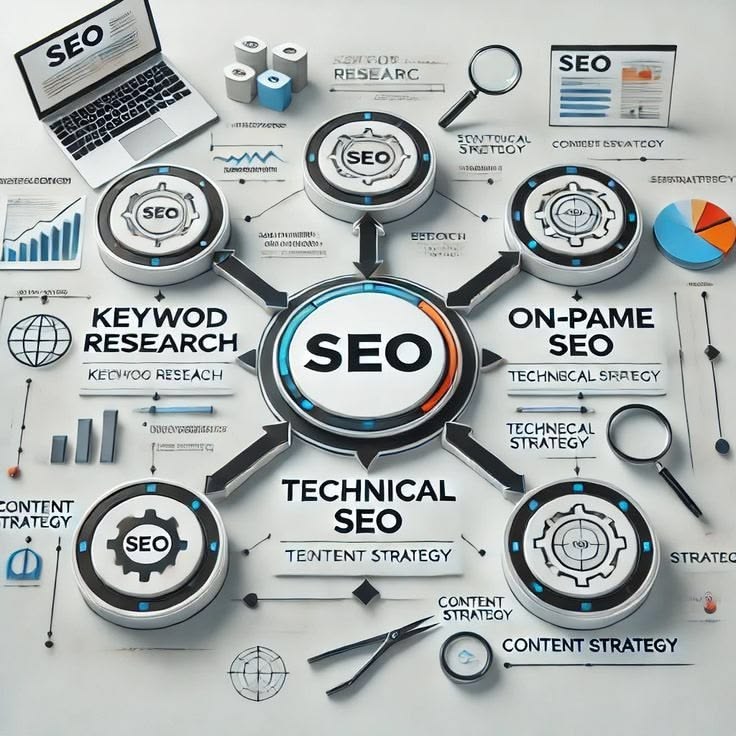
You put in hours writing blog posts, fixing your website, and building links. But how do you know if any of it actually works? That is where SEO KPIs come in. They take the guesswork out of your strategy and show you exactly what is moving the needle — and what is not. In this guide, you will learn what SEO KPIs are, why they matter, and which ones you should be watching closely right now.
What Are SEO KPIs?
SEO KPIs, or Key Performance Indicators, are specific measurements that show how well your SEO efforts are performing. They are not just random numbers. Each one ties back to a real business goal, whether that is getting more visitors, turning those visitors into customers, or proving that your SEO investment is paying off.
Here is a simple way to think about it: a metric is just a number, like total page views. A KPI is that same number connected to a goal. So if your goal is to grow leads from search, then organic form submissions become your KPI — not just page views.
The key difference between SEO metrics and SEO KPIs is that KPIs are goal-aligned. They reveal whether your efforts are actually moving toward a meaningful business result. Not every business needs the same KPIs. A small local shop and a large e-commerce brand will track different things. The trick is choosing the ones that match your goals.
Why Tracking SEO KPIs Matters
Without tracking KPIs, SEO becomes a guessing game. You might publish great content, earn backlinks, and fix technical issues — but without data, you will not know which of those actions actually helped. Here is why tracking the right SEO KPIs makes a real difference:
- You can prove your ROI. Metrics like organic conversions and revenue from search show whether your SEO work is contributing to actual business growth. This is especially important when presenting results to clients or company leadership.
- You spot what is working. When you track rankings, impressions, and landing page performance you can quickly see which pages are almost ready to rank higher and just need a small push.
- You adapt faster. Search results change all the time. Monitoring the right KPIs helps you notice shifts early and update your strategy before things go sideways.
- You improve the user experience. Engagement data shows when people leave pages too quickly or skip your calls to action. That helps you decide whether to improve your content, page speed, or layout.
Top SEO KPIs Every Marketer Should Track
1. Organic Traffic
Organic traffic is the number of visitors who land on your website through unpaid search results. This is one of the most basic and important SEO KPIs you can follow. When your organic traffic grows, it usually means your content is ranking better and reaching more people. When it drops, something may have gone wrong — maybe a Google algorithm update, a technical issue, or outdated content.
In Google Analytics 4, you can track organic traffic by going to Reports > Traffic Acquisition and filtering for "Organic Search." You can also break it down by location, device type, or landing page to get a clearer picture of what is driving results. Pro tip: Do not just look at the overall number. Check which pages bring in the most organic visitors, and focus your energy on improving those.
2. Keyword Rankings
Keyword rankings tell you where your pages show up in search results for specific search terms. If you rank on page one, you get seen. If you are on page three or beyond, most people never find you. Tracking keyword rankings helps you understand whether your content is properly indexed and optimized. It also helps you spot opportunities. For example, if a page ranks in position 8 or 9, a few small improvements could push it into the top five, where most clicks happen.
You can monitor keyword rankings using Google Search Console for free. Go to Performance > Search Results and look at your average position for different queries. Paid tools give you deeper data and competitor comparisons. Important: Track rankings over time, not just as a one-time snapshot. Trends matter more than a single day's data.
3. Click-Through Rate (CTR)
Click-through rate measures how often people click your link after seeing it in search results. If your page appears 1,000 times in search and gets 50 clicks, your CTR is 5%. A low CTR means your title tags and meta descriptions are not convincing enough to earn the click — even when you rank well. Improving these two elements can bring in more traffic without changing your ranking at all.
Google Search Console shows your CTR for every page and keyword. Look for pages with high impressions but low CTR first. These are easy wins — you are already visible, you just need to make the listing more appealing.
4. Organic Conversions
Getting traffic is great, but what really matters is what those visitors do after they arrive. Organic conversions measure how many people from search results take a desired action — like filling out a form, making a purchase, or signing up for a newsletter. If your traffic is growing but conversions are flat, that is a signal. It could mean your content attracts the wrong audience, your landing pages need work, or your calls to action are unclear.
To track this in GA4, set up conversion events and apply filters to show only organic sessions. The formula is simple: divide organic conversions by organic sessions, then multiply by 100 to get your conversion rate percentage. Teams at YS Digital Services always recommend looking at this metric alongside traffic. High traffic with low conversions is a problem worth solving before you chase more visitors.
5. Backlinks and Referring Domains
Backlinks are links from other websites pointing to yours. They are one of the strongest signals Google uses to measure authority and trust. More high-quality backlinks usually means better rankings. But it is not just about the number of backlinks. Referring domains matter too. Getting 100 links from 100 different websites is much stronger than getting 100 links from the same one site. A diverse backlink profile signals broader trust across the web.
Tools like Ahrefs, Moz, or Google Search Console help you monitor your backlinks. Focus on earning links from reputable websites in your industry. One strong backlink from a trusted source can outweigh dozens from low-quality sites.
6. Page Speed and Core Web Vitals
Page speed is exactly what it sounds like — how fast your pages load. But Google goes even deeper with a set of measurements called Core Web Vitals. These measure real-world user experience, including how fast content loads, how quickly a page responds to clicks, and how stable the layout is as it loads. Why does this matter for SEO? Because Google uses these signals as a ranking factor. A slow page frustrates users, and Google notices when people leave quickly. A fast, smooth experience keeps people engaged and sends positive signals to search engines.
You can checkyour page speed and Core Web Vitals for free at PageSpeed Insights (pagespeed.web.dev). It gives you a score and a list of specific fixes you can make to improve performance.
7. Bounce Rate and Engagement Rate
Bounce rate used to measure how many visitors left after viewing just one page. Google Analytics 4 now focuses on engagement rate instead, which is a more useful measure of real user behavior. In GA4, an engaged session is one where a visitor spends at least 10 seconds on your site, views two or more pages, or triggers a conversion event. A high engagement rate means people find your content valuable and stick around. A low rate suggests they are arriving and leaving without getting what they came for.
Use this formula to calculate engagement rate: engaged sessions divided by total sessions. If your engagement rate is low on certain pages, try improving the content quality, adding internal links, or making your layout easier to read.
8. SEO Return on Investment (ROI)
SEO ROI shows whether the money and time you put into SEO is actually generating returns. This is the KPI that gets the attention of business owners and decision-makers. The formula is: [(Revenue from SEO – SEO Costs) ÷ SEO Costs] × 100. Make sure you include all your costs — tools, content writers, developers, and team time. When you can show a positive ROI, it becomes much easier to justify your budget and plan for the future.
YS Digital Services recommends calculating SEO ROI at least quarterly. Because SEO results build over time, monthly snapshots can be misleading. A three- to six-month view gives a clearer picture of real growth.
9. Organic Impressions
Impressions tell you how many times your pages appear in search results, even when no one clicks. This is a visibility metric — it shows how much of the search landscape your website covers. Growing impressions means Google is showing your content to more people, even if your CTR is still low. It is an early sign that your SEO is moving in the right direction, especially for newer content that has not yet earned strong click-through rates. You can find impression data in Google Search Console under the Performance report.
How to Set Up Your SEO KPI Reporting
Tracking KPIs only helps if you look at them consistently. Here is a simple reporting setup that works:
- Set up Google Search Console and Google Analytics 4 on your website. These two free tools together cover most of the KPIs in this list. Connect them to each other for even richer data.
- Pick a reporting frequency. Weekly check-ins work well for fast-moving metrics like rankings and traffic. Monthly reports are better for conversions and ROI, since these take time to reflect real changes.
- Focus on trends, not single data points. A one-day traffic drop means little. A three-week downward trend means it is time to investigate.
- Compare time periods fairly. Always compare the same period year-over-year when possible, since traffic naturally changes by season.
Common Mistakes Marketers Make With SEO KPIs
- Tracking too many metrics at once. When everything feels important, nothing actually is. Pick five to seven core KPIs and focus there first.
- Ignoring the connection between KPIs. Traffic, rankings, and conversions all influence each other. Looking at them in isolation gives you an incomplete picture.
- Setting unrealistic timelines. SEO takes time. Expecting big ranking changes in two weeks leads to poor decisions. Most meaningful shifts happen over three to six months.
- Not aligning KPIs with business goals. If your goal is lead generation track leads — not just traffic. KPIs must always connect back to what the business actually needs.
Final Thoughts
SEO without KPIs is like driving without a dashboard. You might be moving, but you have no idea how fast, how far, or whether you are heading in the right direction. The good news is that most of these KPIs are easy to start tracking today with free tools like Google Search Console and GA4. Start simple. Pick three or four KPIs that match your current goals, build a habit of checking them regularly, and adjust your strategy based on what the data tells you.
Whether you are a solo marketer or working with an agency like YS Digital Services, staying on top of your SEO KPIs is what separates random effort from real, measurable growth.
Frequently Asked Questions
Q1: What is the most important SEO KPI?
It depends on your goal. For most businesses, organic traffic and organic conversions are the two most important starting points. Traffic shows visibility; conversions show value.
Q2: How often should I check my SEO KPIs?
High-level metrics like traffic and rankings are worth reviewing weekly. Deeper metrics like ROI and conversion rates make more sense on a monthly or quarterly basis.
Q3: What tools do I need to track SEO KPIs?
Google Search Console and Google Analytics 4 cover the basics for free. For keyword tracking, backlink analysis, and competitor insights, tools like Ahrefs, SEMrush, or Moz are popular choices.
Q4: How long does it take to see results from SEO?
Most SEO efforts take three to six months to produce visible results. Some changes, like improving page speed, can show effects faster. Content and link building usually take longer to pay off.
Q5: What is the difference between an SEO metric and an SEO KPI?
A metric is any data point you can measure. A KPI is a metric that is directly tied to a business goal. Not all metrics are KPIs, but all KPIs are metrics.
Q6: Can small businesses benefit from tracking SEO KPIs?
Absolutely. Even a few basic KPIs like organic traffic and keyword rankings can help a small business understand whether its online presence is growing and where to focus next.